Ink Blots, Accidents, and Ephemera
Susan Zieger
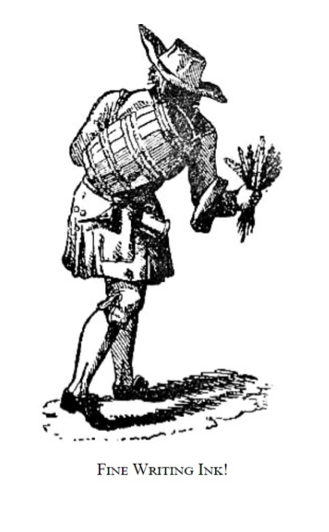
My inkstand is made of a flat piece of Untersberg marble which is hollowed out to receive the glass inkpot; and the inkpot has a cover with a knob made of the same stone. Behind this inkstand there is a ring of bronze statuettes and small terra cotta figures. I sat down at the desk to write, and then moved the hand that was holding the pen-holder forward in a... Read more...
Flickering Documents in Unsteady Archives
Lindsay Brandon Hunter
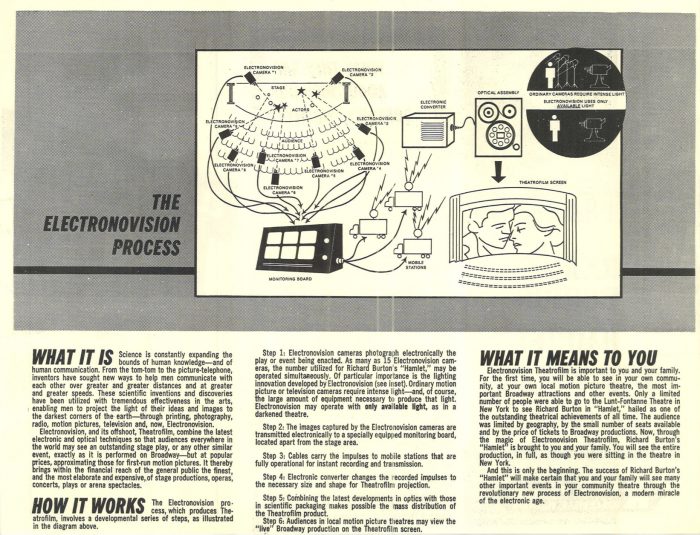
Recordings of theatrical performance are notoriously unsatisfying. The long history of attempts to mediatize theatre (and the general sense of disappointment that has attended those efforts) is a testament to the difficult proposition of translating theatrical performance to television or film, in particular. In his history of the UK’s National Theatre, Daniel Rosenthal shares then-director Richard Eyre’s assessment of the difficulty of recording stage work in the mid-twentieth century: “[I]f... Read more...
Threshold Experiences of Memory in Paris, 1889 and 1900
Christina Svendsen
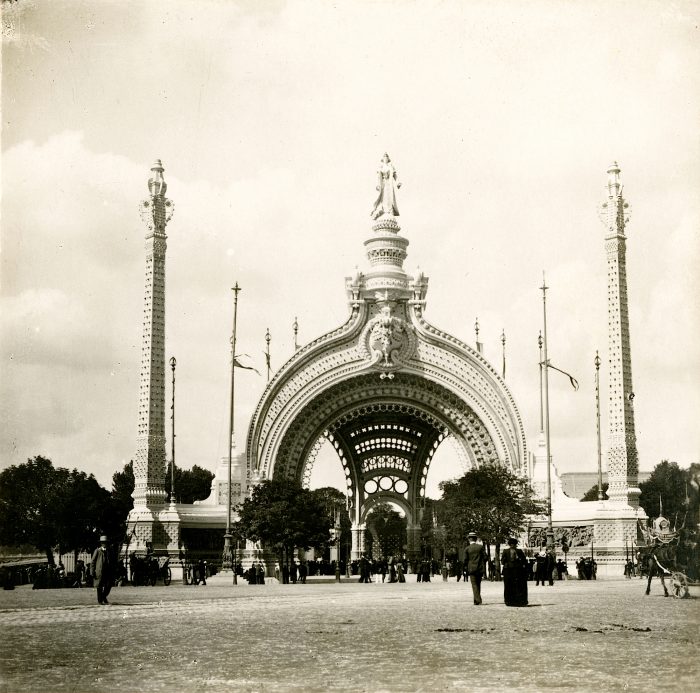
Ephemera are a defining feature of modern mass media, fleeting and consumable, from ticket stubs to newspapers, radio broadcasts, and even email. “Mechanical reproducibility,” to use Walter Benjamin’s phrase, has made the artifacts of modern culture cheap and easy to produce, and easily disposable. By contrast, buildings, and in particular monuments, are assumed to incarnate stable historical memory. Pierre Nora’s notion of architectural sites of collective memory, or lieux de... Read more...
A Conversation with Mita Mahato
Priti Joshi, Susan Zieger, Mita Mahato
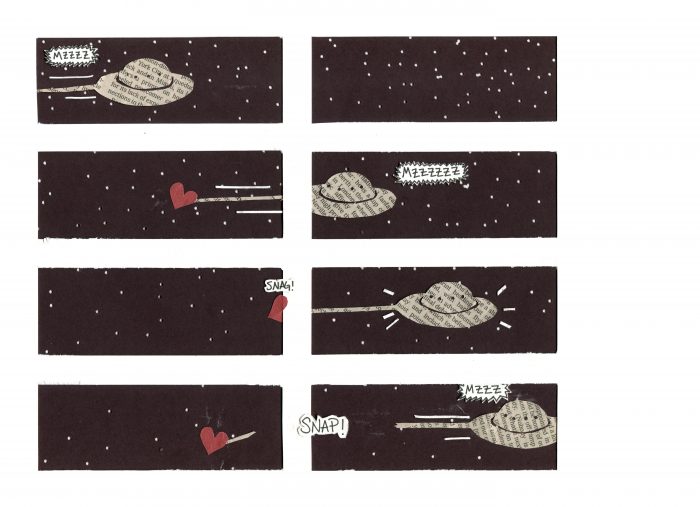
If the digital age has relegated paper to an old medium, it has also changed the significance of paper’s ephemerality. Artist Mita Mahato, who works in cut paper, collage, comics, and limericks, has been exploring this new significance in a visual idiom that is both playful and wary. We met with Mahato to discuss her work’s unique engagement with disposability, the Anthropocene, nostalgia, and survival. –Priti Joshi and Susan Zieger... Read more...

The Strata of Digital Inscription
Dennis Yi Tenen
Digital text, at the basis of all computer-mediated epistemological activity, appears to view at once an ephemeral and enduring phenomenon. It is, as Wendy Hui Kyong Chun wrote, an “enduringly ephemeral” inscription that “create[es] unforeseen degenerative links between humans and machines.”1 At the site of its projection, on “soft” screens, the text shimmers and wanes, suspended in liquid crystal. At the site of its storage, on “hard” drives, among “floating... Read more...

Ephemerality and Memorialization in the Archive of Indian Newspapers
Priti Joshi
On May 10, 1857, three regiments of sepoys in the Meerut garrison of the British-India Army mutinied against their British officers. Before day’s end, the sepoys were joined by civilians, who together broke open the jail, burned or plundered tax offices and money-lenders’ homes, and marched to Delhi forty miles away to demand that the Mughal emperor lead their resistance.1 The ensuing turmoil inflamed an often-bellicose Anglo-Indian press, and prompted... Read more...

Kimberly Hall
In his January 27, 2014 keynote speech at the AXS Partner Summit Snapchat CEO Evan Spiegel summarized the ethos and functionality of his company: “Snapchat discards content to focus on the feeling that content brings to you, not the way content looks.” Snapchat is a native mobile application that allows you to send “Snaps,” or text, photo, or video messages to friends in your contact list. The company is most... Read more...
Caribbean Voiceson the BBC
Mollie McFee
In 1979, during a lecture at Harvard University, the Barbadian poet Kamau Brathwaite laid out a history and theory of Caribbean literature that placed sound at its center. In his talk Brathwaite made a now canonized statement that, “The poetry, the culture itself, exists not in a dictionary but in the tradition of the spoken word… When it is written, you lose the sound or the noise, and therefore you... Read more...
