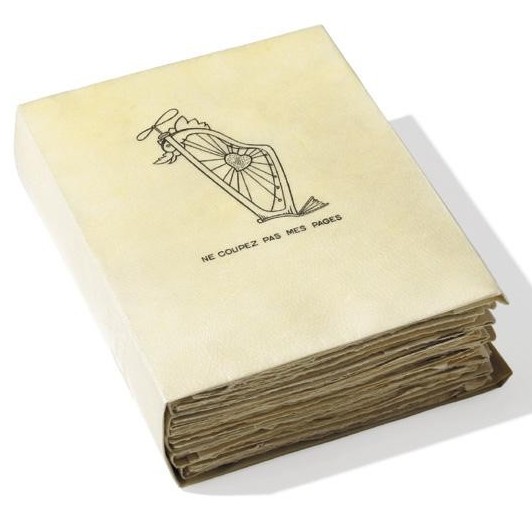
Poésie de Mots Inconnus, 1949, Paris, Edités par Le Degré 41
Johanna Drucker
Hold a copy of the original hand-printed edition of this small, compact, thick volume in your hands and you will feel the vellum breathe along the many pleats of its spine like the lungs of an accordion or bellows. The feel of the dried skin against your own carries physical associations of the living thing it once was, and the winged harp printed in black ink has bitten into the... Read more...
On (Post-)Conceptual Writing
Luke Skrebowski
It is this capacity of the contemporary artist to recognize his contemporaries that is the essential feature of his contemporaneity. –David Antin If literature, via its privileged relation to the Ancient Greek notion of poiesis, long stood as the master category of art, philosophically understood, it has for some time now lost its dominance. Indeed, it seems ontologically threatened because of both the longstanding formal crises of its principal... Read more...
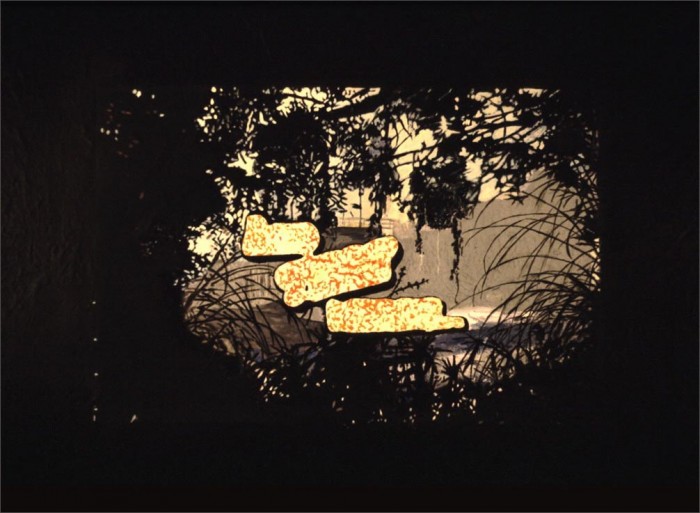
Photogram, Phoneme, Ph. . .ontology
Garrett Stewart
The force of illegibility, its aesthetic power, is always in the blind eye of the beholder. What some see (by not seeing) as a structuring absence, others don’t think is there to be seen – or seen through to – at all. Or to be heard. At least not here, now, where image or meaning is being made. So questions inevitably persist about such making in regard to the the... Read more...
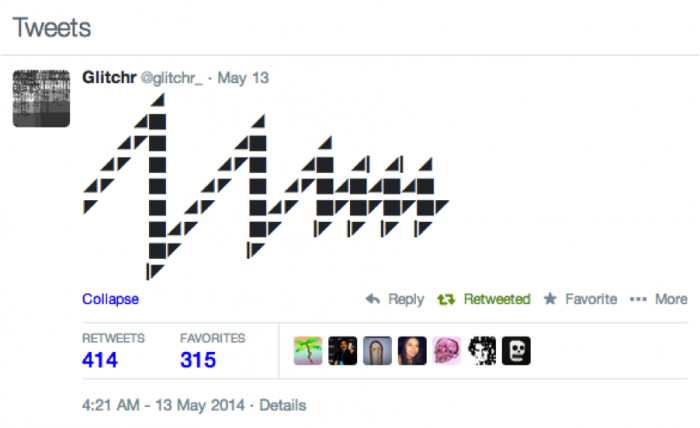
Rèading †ex† and Codè as a Plaÿ of $pacés
Matt Applegate
[C]ultures, the business of the Humanities, do not depend on individual intentions but on all the media that become possible on the basis of natural languages, their limits do not become visible until viewed in the alphanumerical light of modern machines. —Friedrich Kittler, “Thinking Colors and/or Machines” The thin film of writing becomes a movement of strata, a play of spaces. —Michel de Certeau, The Practice of Everyday Life... Read more...
André Hodeir and the Music Essay
John Mowitt
I Judging by the flurry of recent publications in English alone – Corrigan’s The Essay Film, Rascaroli’s The Personal Camera and a recent issue of Sight and Sound – the essay has returned.1 As Corrigan’s subtitle – “From Montaigne, After Marker” – makes plain, the return of the essay has figured cortically in the labors of cinema studies as it has focused renewed interest on the endlessly perplexing phenomenon of the... Read more...

Stephen Voyce
The room was dark as ebony. █████████ started playing a track very loudly — I mean very loudly. The song was, “Let the bodies hit the floor.” I might never forget that song. -Mohamedou Ould Slahi, Guantánamo Diary1 Our image ████████████ █████████ dominion -Philip Metres, Sand Opera2 In short, the thesis of this book is ███████████. -Craig Dworkin, Reading the Illegible3 In January 2015 Mohamedou Ould Slahi... Read more...
Translation, Multilingualism, and the New Regimes of Attention
Michael Cronin
Are you all sitting still and paying attention? The familiar injunction of the schoolmistress has become the watchword of the new economy. If the notion of economy is based on the management of scarce resources, attention in a media-saturated world has become the most precious resource of all. Already in the mid-1990s Michael Goldhaber was arguing that with the emergence of digital technologies, traditional factors of production would decline in... Read more...

A Project
Kate Briggs
Reading and Living “The Story in It” is a twenty-one page short story by Henry James, first published in 1902.1 Three characters appear: Maud Blessingbourne, a guest; Mrs. Dyott, her host; and Colonel Voyt, who visits. We discover as we read that Maud is secretly in love in with Colonel Voyt. Mrs Dyott has guessed as much and tells the Colonel, who had no idea. Together they laugh about it.... Read more...

Diana Hamilton
We can often trace the origin of a work’s “style” somewhere external to the work. This is true despite style’s frequent framing, for at least a few hundred years, as some original product of an artist: for Sontag, “Style is the principle of decision in a work of art, the signature of the artist’s will;”1 for Buffon, of course, “Le style c’est l’homme meme.”2 There are many critical accounts of style’s... Read more...
